

In an evolving health landscape, emerging research continues to highlight concerns that could impact everyday wellbeing. Here’s the key update you should know about:
A landmark IOC consensus sets out the first comprehensive, female-focused roadmap for preventing sports injuries, calling for changes in training, equipment, rules, and sporting culture to truly protect women and girls in sport.
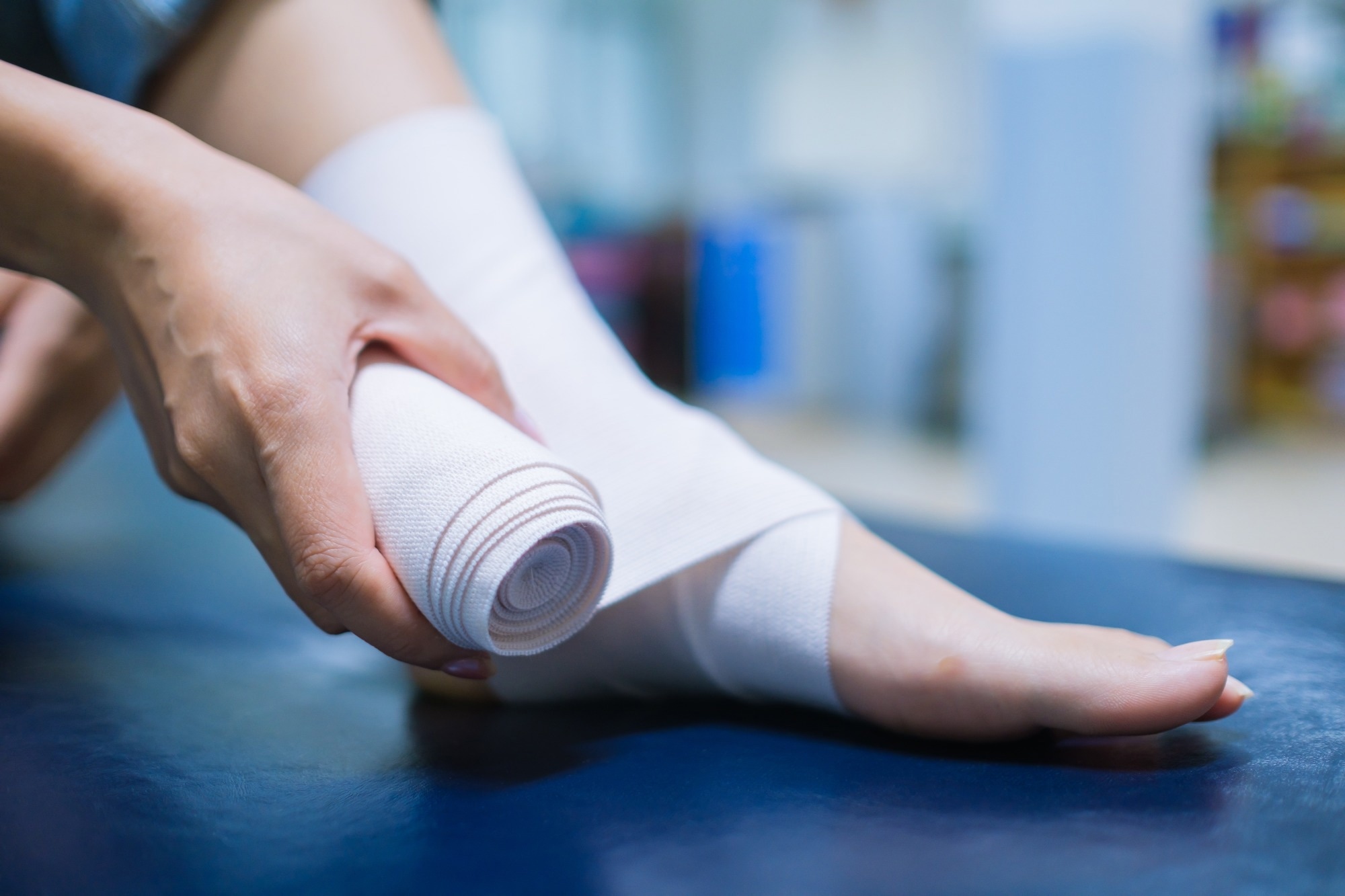
Consensus statement: Female, woman and/or girl Athlete Injury pRevention (FAIR) practical recommendations: International Olympic Committee (IOC) consensus meeting held in Lausanne, Switzerland, 2025. Image Credit: xyfen / Shutterstock
In a recent study published in the British Journal of Sports Medicine, researchers synthesized and analysed evidence from more than 600 research papers, including over 600,000 participants, to develop the FAIR (Female Athlete Injury pRevention) consensus statement focused on female, woman and girl athletes.
In a society where sports safety protocols have primarily been designed for men and “shrink-wrapped” for women, this statement presents the first International Olympic Committee consensus focused specifically on injury prevention for female, woman and girl athletes in the field, comprising 56 recommendations that cover everything from mandatory neuromuscular warm-ups to policy changes regarding body contact.
The FAIR consensus underscores a glaring lack of historical female-specific sports research, highlights that injury prevention requires a “whole sports system” approach, tackling not only biomechanics but also environmental, cultural and organisational factors like harassment and body shaming.
Growth of Female Sports Participation and Injury Burden
Recent decades have witnessed a surge in female (women and girls) participation in sports globally, lauded for their perceived or observed social and health benefits. However, this increase has been accompanied by a corresponding surge in the burden of injury.
Sex-Based Disparities in ACL and Concussion Rates
For years, the sports medicine community has grappled with alarming statistics regarding ACL (Anterior Cruciate Ligament) tears and concussions in female populations, which are frequently cited as examples of sex-related injury disparities in sport. Though these issues are now widely acknowledged, a significant hurdle in addressing them has been the “male-as-norm” bias in conventional sports research, historically, injury prevention protocols were developed using data from male athletes and applied (with little-to-no modification) to women.
Need for Female-Specific Sports Research
Unfortunately, the “male-as-norm” approach fails to account for biological, physiological and sociocultural differences. Novel research is imperative to prevent suboptimal consequences such as recurrent injury, early retirement from sport, or long-term conditions like osteoarthritis, in the rapidly growing female athlete population.
Development Process for the IOC FAIR Consensus
The Female/woman/girl Athlete Injury pRevention (FAIR) International Olympic Committee (IOC) Consensus aimed to address these unwanted consequences by leveraging a hybrid eight-step framework, culminating in a face-to-face meeting in Lausanne, Switzerland, between March 31 and April 2, 2025.
Collaborative Evidence Synthesis and Expert Input
The consensus was a collaborative effort involving 109 authors across seven evidence reviews, alongside experts from the IOC and an External Advisory Committee (EAC) comprising athletes, coaches and clinicians.
Combined Systematic Reviews and Lived Experience Data
The consensus carried out both a review of historic literature (five systematic reviews and meta-analyses, one scoping review and one additional systematic review) and generated novel data (a concept mapping project to capture lived experiences), thereby synthesizing data from over 600 research papers involving more than 600,000 participants.
Consensus Rating Using RAND/UCLA Method
The collaboration leveraged a modified RAND/UCLA Appropriateness Method (RAM) to validate recommendations. Recommendations were voted on by 23 experts using a 9-point Likert scale (where one is “not important” and nine is “critically important”). Consensus for inclusion was defined strictly: an item was “critical to include” only if ≥70% of experts scored it 7–9, and ≤15% scored it 1–3, thereby ensuring that only the most universally agreed-upon strategies made the final recommendation cut.
Categories of FAIR Injury Prevention Recommendations
The consensus yielded 56 final recommendations categorized into: 1. Injury prevention strategies, 2. Modifiable risk factors, and 3. Environmental, dissemination and implementation considerations.
Neuromuscular Warm-Ups for Injury Prevention
Training and Physical Interventions: For exercise-based injury prevention, the consensus recommends mandating neuromuscular training (NMT) warm-ups and exercises focusing on strength, balance, and movement control across all sports. Specifically, these protocols should be performed for a minimum of 10 minutes, at least twice a week, to reduce the risk of lower extremity injuries significantly.
Protective Equipment Standards for Female Athletes
Personal Protective Equipment (PPE), Specific gear recommendations were ratified for various sports, including:
- Mouthguards, mandated in child and adolescent ice hockey to prevent concussion and orofacial injury,
- Ankle braces, recommended primarily for secondary prevention in athletes with a history of ankle sprains and, in some settings, to reduce the risk of first-time sprains,
- Breast support, wherein appropriately fitted sports bras are recommended in all sports to reduce movement-induced pain and chafing, which are often overlooked as factors in general guidelines.
Rule and Policy Modifications to Reduce Contact Injuries
Policy and Rules, Finally, the group endorsed rule changes to minimize contact. This includes eliminating body checking in child and adolescent ice hockey, Para ice hockey and ringette to prevent all types of injuries. Furthermore, “no-pocket” rules for shorts in flag football were recommended to avoid finger injuries.
Low Energy Availability and Social Risk Factors
The study identified “problematic low energy availability” (often linked to Relative Energy Deficiency in Sport [REDs]) as an important modifiable risk factor for bone stress injuries. Perhaps most notably, the findings extended into social territory, recommending the creation of environments free from body shaming and gender-based violence, acknowledging that psychological safety is intrinsic to physical safety.
Need for System-Level Change to Protect Athletes
The FAIR consensus concludes that protecting female athletes requires a holistic overhaul of the sports system, highlighting that simply prescribing exercises without addressing policy, culture, education, and implementation pathways is insufficient in curbing the rising tide of global female athlete injury. It suggests that stakeholders must address the “gender data gap” and provide equitable funding to support future injury mitigation.
Ongoing Evidence Gaps in Female-Specific Studies
Notably, while 83% of the 142 candidate recommendations reached consensus in the second round of voting, many of the final recommendations were still found to rely on combined male/female data due to a lack of female-specific studies.
Journal reference:
- Crossley, K. M., et al. (2025). Female, woman and/or girl athlete injury prevention (FAIR) practical recommendations: International Olympic Committee (IOC) consensus meeting held in Lausanne, Switzerland, 2025. British Journal of Sports Medicine, 59, 1546–1559. DOI – 10.1136/bjsports-2025-110889. https://bjsm.bmj.com/content/59/22/1546
